Therapy for First Responders

When the mind and body keep responding after the call is over.
Book a Consultation
Summit provides in-person therapy in Michigan and online therapy for first responders, including law enforcement, firefighters, paramedics, EMS, and emergency professionals carrying the effects of repeated crisis exposure.

For those searching for a therapist for first responders, therapist for firefighters, therapist for police officers, or therapy for paramedics, Summit offers care with clinical depth, confidentiality, and respect for the realities of the work.

The Weight of Repeated Crisis Exposure

First responders are trained to move toward what others are protected from.

Over time, repeated exposure to danger, injury, death, conflict, urgency, and responsibility can shape the nervous system. The body may stay on alert long after the scene is cleared.
Police officer sitting in patrol car writing notes on a notepad at dusk near water.

This may show up as sleep disturbance, irritability, numbness, anger, isolation, hypervigilance, burnout, or difficulty returning to ordinary life after repeated high-stress calls.

These responses are not weakness.

They are information from a system that has been asked to carry too much, too often, without enough space to process what happened.

Why First Responders May Resist Therapy

Not because they don't need help, but because they know the risk of being misunderstood.
Dry rugged hills with eroded ridges stretching under a cloudy sunset sky.

Many first responders do not avoid therapy because they do not need help. They avoid therapy because they know the risk of being misunderstood.

There may be concerns about confidentiality, fitness for duty, stigma, being seen as unreliable, or having to explain a culture most people do not fully understand.

Some have tried therapy before and felt the clinician could not hold the intensity, pace, or moral complexity of the work.

Therapy for first responders needs to be direct, grounded, and clinically steady — not fragile, overly cheerful, minimizing or generic.

Law Enforcement, Stigma & Culture

Police officers often carry a specific kind of pressure: constant vigilance, public scrutiny, exposure to threat, and the expectation to remain composed in situations most people will never see.
Police officer in dark uniform walking on rocky dirt path at sunset with buildings and trees nearby.

Therapy for police officers should account for occupational trauma, moral injury, cumulative stress, and the difficulty of trusting someone outside the culture.

Summit provides therapy that does not rush judgment, reassurance, or interpretation. The work begins with trust and containment, so that what has been carried can be understood with precision and care.

Therapy for Police Officers

Therapy for police officers may support those navigating hypervigilance, irritability, emotional shutdown, sleep disruption, relationship strain, grief, guilt, or the effects of repeated exposure to violence, crisis, and human suffering.

The goal is not to make you less capable. It is to help your system stop carrying every call as if it is still happening.

Therapy for Firefighters

Firefighters often move through intense moments quickly — from one call or scene to the next. There may be little time to metabolize what happened before the next crisis arrives.

Therapy for firefighters may support cumulative trauma, burnout, grief, panic, sleep disturbance, numbness, or the quiet exhaustion that comes from functioning well while carrying too much. Summit offers a space where competence does not have to become silence.

Therapy for EMS & Emergency Medical Professionals

Paramedics, EMS workers, and emergency medicine professionals often move between patients and high-acuity situations with little pause.

The pace of the work can leave little room to process what has been witnessed or carried. Therapy for paramedics and emergency medical professionals may support cumulative trauma, burnout, grief, panic, sleep disturbance, numbness, or the strain of staying composed while repeatedly encountering crisis.

First Responder Mental Health Awareness

First responder mental health awareness is not only about recognizing symptoms.

It is about understanding how repeated crisis exposure shapes the body, relationships, identity, and sense of safety over time.

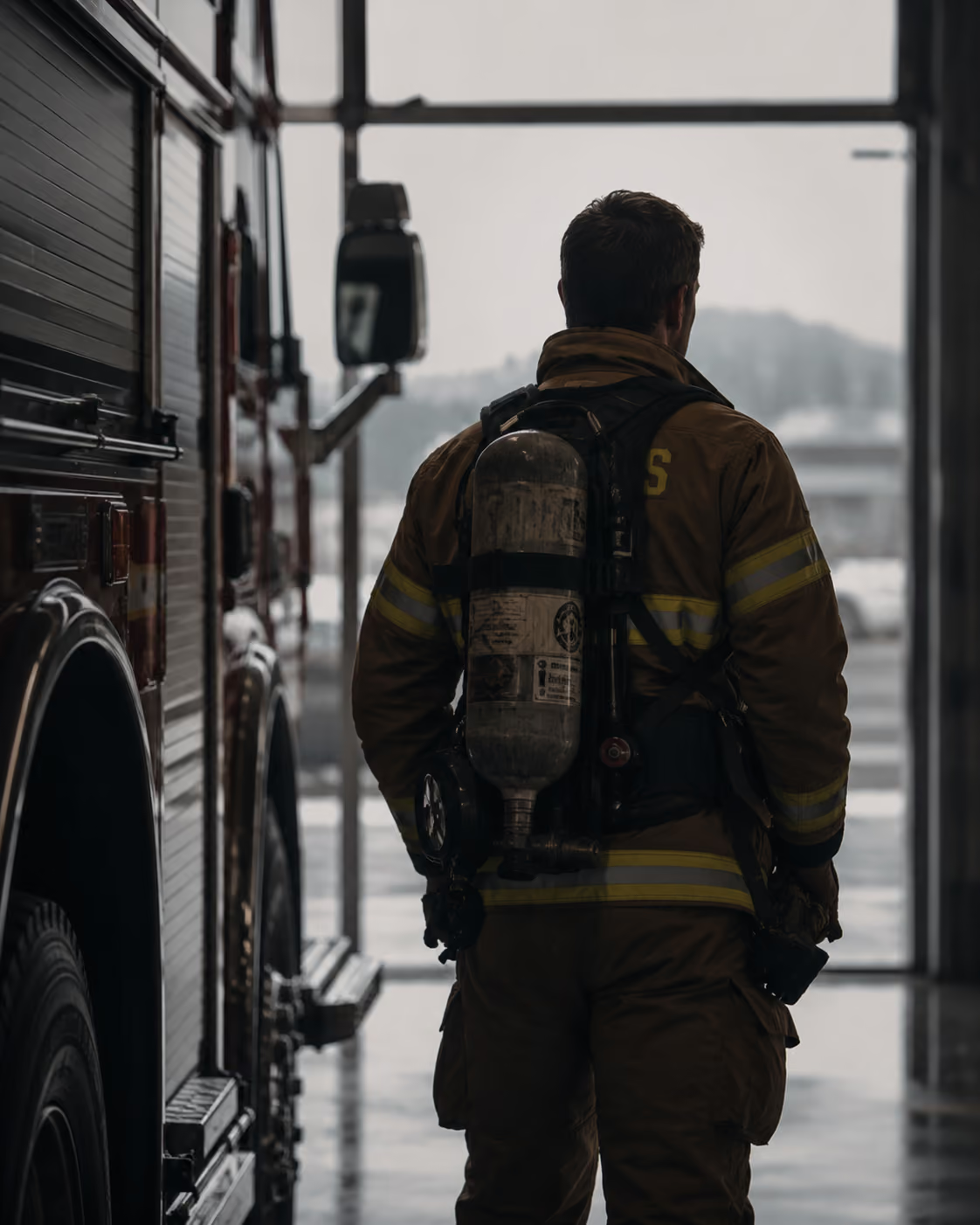
Firefighter in full gear with oxygen tank stands next to fire truck inside the station.

First responder mental health training often teaches recognition and response. Therapy goes deeper — helping the person behind the role understand what has been carried, protected, and left unresolved.

What Sessions Looks Like

Mountain peaks shrouded in mist and clouds under a dark, moody sky.
Therapy at Summit is relational, trauma-focused, somatic, and depth-oriented.
Sessions may include reflection, nervous system awareness, trauma processing, work with moral injury, emotional regulation, and careful attention to the protective patterns that develop through repeated exposure to crisis.
The work is paced. You are not expected to disclose everything at once, defend your experience, or translate the realities of the job into language that makes other people comfortable.

The goal is to meet the work with steadiness.
Book a Consultation

Virtual Therapy Across PSYPACT States

Summit offers online therapy for first responders located in PSYPACT-participating states.

This allows law enforcement officers, firefighters, paramedics, EMS, and emergency professionals to access care from a licensed psychologist with experience in complex trauma, PTSD, moral injury, cumulative stress, and high-acuity emotional work.
Learn more about PSYPACT
Line drawing map of the USA

Book with a therapist for first responders who understands crisis work.

Meeting intensity with precision and care.
Book a Consultation
Frequently Asked Questions

Why do first responders struggle to seek therapy?

First responders may avoid therapy because of stigma, confidentiality concerns, fear of professional consequences, or past experiences of being misunderstood. What helps is care that understands first responder culture, repeated crisis exposure, and the need for trust before disclosure.

What kind of therapist is best for first responders?

The best therapist for first responders is clinically trained in trauma, occupational stress, PTSD, moral injury, crisis work, and high-acuity emotional experiences. The therapist should be direct, grounded, and able to hold intensity without overreacting or minimizing it.

How does occupational trauma affect law enforcement officers?

Occupational trauma can affect law enforcement officers through hypervigilance, irritability, emotional shutdown, sleep disturbance, distrust, isolation, relationship strain, and difficulty feeling safe or settled outside of work.

Is therapy confidential for police officers?

Therapy is generally confidential, with legal and ethical limits related to safety. Police officers concerned about confidentiality should discuss privacy, documentation, and any reporting limits directly with their therapist before beginning.

What is the difference between PTSD and cumulative trauma in first responders?

PTSD may develop after one or more traumatic events. Cumulative trauma builds over repeated exposure to crisis, threat, injury, death, or high-stress situations. Many first responders experience both.

What mental health conditions are most common in first responders?

First responders may experience PTSD, depression, anxiety, burnout, substance use concerns, sleep disturbance, moral injury, grief, anger, emotional numbness, or difficulty transitioning out of work mode.

How do I find a therapist who understands first responder culture?

Look for a therapist for first responders with experience in trauma, law enforcement, fire, EMS, emergency medicine, moral injury, and occupational stress. The right clinician should understand the culture without reducing you to the role.

Can a firefighter or paramedic lose their job for seeking therapy?

This depends on the employer, jurisdiction, role, circumstances, and safety concerns involved. Many firefighters and paramedics seek therapy privately. If you are concerned, ask about confidentiality and documentation before starting care.

What is first responder burnout and how is it treated?

First responder burnout can involve exhaustion, cynicism, numbness, irritability, loss of meaning, or feeling unable to recover between calls. Treatment may include trauma-informed therapy, nervous system regulation, boundaries, rest, and work with unresolved crisis exposure.

Is online therapy safe for first responders who need confidentiality?

Online therapy can be a safe and private option when delivered through secure platforms and guided by a licensed clinician. For many first responders, virtual therapy makes it easier to access specialized care outside their local community.